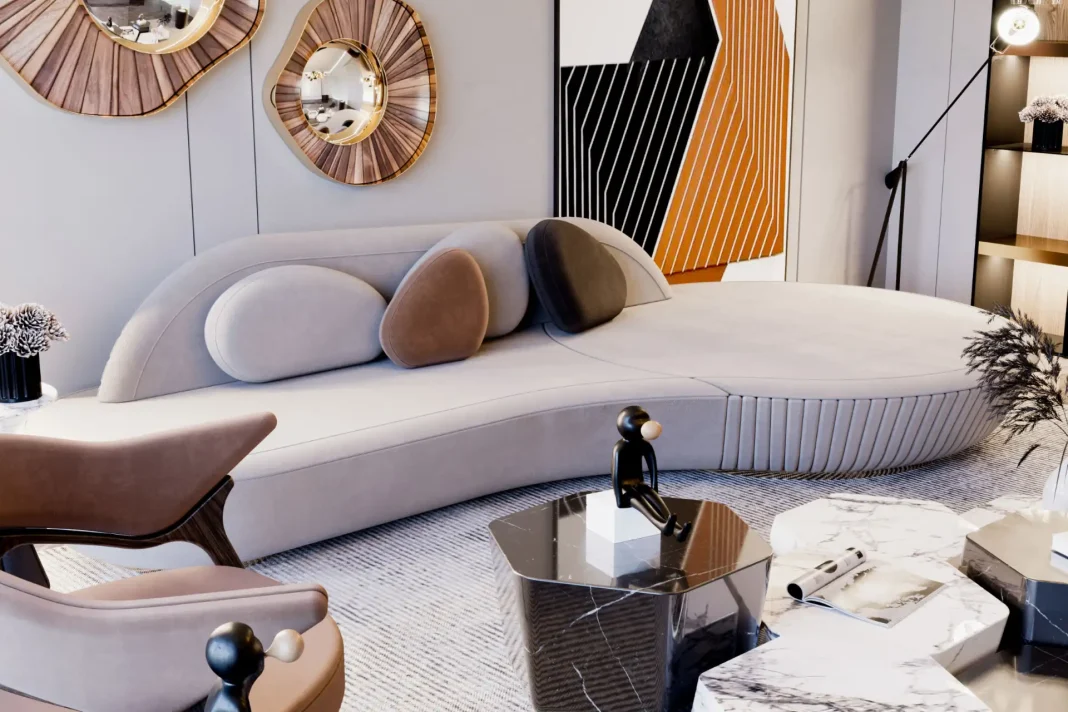
Maximalism is shedding the excess without losing its personality. Curation replaces accumulation, as art, colour, texture and objects with a story create characterful yet balanced interiors. It is a more considered kind of abundance.
Minimalism emerged in the 1960s and 1970s and enjoyed a revival in the 2010s, equating empty spaces, neutral colours and clean lines with elegance. In response to those white, orderly and often interchangeable interiors, maximalism brought back colour, ornaments, pattern, collections and, above all, individuality. But as the design pendulum swung in the opposite direction, ‘more is more’ eventually became visual overload, with colours, furniture and decorative objects all competing for attention. Now the excess is being reined in, but this is not a return to minimalist restraint. Maximalism is simply becoming more streamlined.
One way to describe this trend is ‘calm maximalism’, although the interiors press tends to use ‘curated maximalism’, ‘mindful maximalism’ or ‘heritage maximalism’. The nuances vary, but the underlying idea is the same: there is still plenty to look at, only now it is more carefully chosen. More personality, less noise; more meaning, less quantity.
Homes are filling up again, but not with just anything and everything. Art, books, ceramics, travel mementoes, textiles, inherited furniture and vintage pieces all add visual layers. Old and contemporary objects can sit side by side, as can craftsmanship and modern design. Colours add depth and texture brings interest. The idea is not to chase uniformity, but neither is it to encourage indiscriminate clutter. Every object has to earn its place. Harmony is gradually winning out over chaos.
The difference lies in intention. What matters is the story told by the objects on display, not how many things can be squeezed into a room. The aim is to create warm, personal and lived-in interiors, far removed from both the clinical feel of extreme minimalism and the antique-shop effect of maximalism pushed too far. Identity, craftsmanship, authenticity and memory are becoming more important than immediate visual impact.
Homes & Gardens features a more considered and intentional form of maximalism among its trends for 2026, while Architectural Digest points to increasingly personal and eclectic interiors built up through layers of colour, texture and decoration. The different names all point the same way: bringing back character without returning to excess.
The movement looks set to continue. Sherwin- Williams’ Colormix Forecast 2027 suggests that this more restrained approach will carry through into next year. Maximalism is not going anywhere. It is simply maturing.