Colour is unapologetically taking its place at the heart of interiors once more. Deep shades, all-over colour and textured finishes are set to define rooms in 2026 and 2027, creating interiors to experience rather than simply admire.
After years of white, grey and beige, richer colours are returning to interiors. Current forecasts suggest that, as 2026 gives way to 2027, rooms will become warmer, more expressive and more personal. Sherwin-Williams’ Colormix Forecast 2027 brings together 48 shades, ranging from moss green and clay to burgundy, jewel tones and mineral-inspired colours, in a palette that encourages a freer approach to colour, based as much on feeling as on design rules.
Architectural Digest (AD) describes this as a move away from safe neutrals towards bolder colour choices.
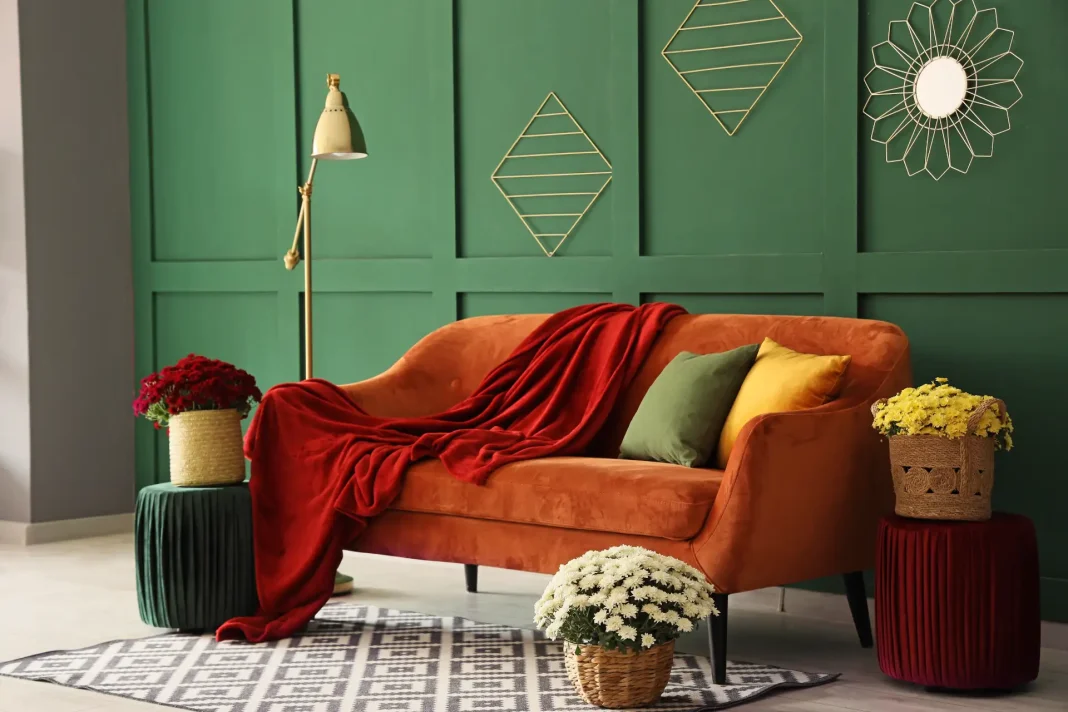
Moss, sage and olive greens; terracotta, clay, tobacco, plum and petrol blue; and browns reminiscent of honey, caramel and coffee all appear in this new palette. Most take their cue from earth and nature but are deeper and stronger than the neutrals they replace.
With ‘colour drenching’, a single colour extends across walls, ceilings, mouldings, doors and woodwork, removing the usual breaks of white between them. Colour is no longer an accent but the defining feature of the room, a look that AD continues to champion.
‘Hue drenching’ takes the effect a step further by using different intensities from the same colour family: pale and deep greens, a range of earthy shades or blues in varying strengths. The result is layered rather than uniform but still feels cohesive. Homes & Gardens highlights how colour, texture and light can be combined to give a room greater visual depth while maintaining a sense of continuity.
Texture adds another dimension through stucco, limewash, mineral finishes and deliberately uneven surfaces. As light falls across them, it creates subtle variations, highlights and shadows within the colour itself. Although technically separate trends, texture and colour drenching work towards the same aim of creating more tactile and sensory interiors. AD points to the growing popularity of textured wall treatments in 2026, citing Venetian plaster and limewash as the starting point for a move towards increasingly tactile and sculptural surfaces.
Naturally, colour, intensity and texture can all be adjusted to suit the size of the room, the available daylight and the desired effect. Even small rooms are beginning to shake off the old rule that they must be painted white. In July, AD featured a small bedroom covered in burgundy limewash, demonstrating that deep colours can work just as well in a few square metres.