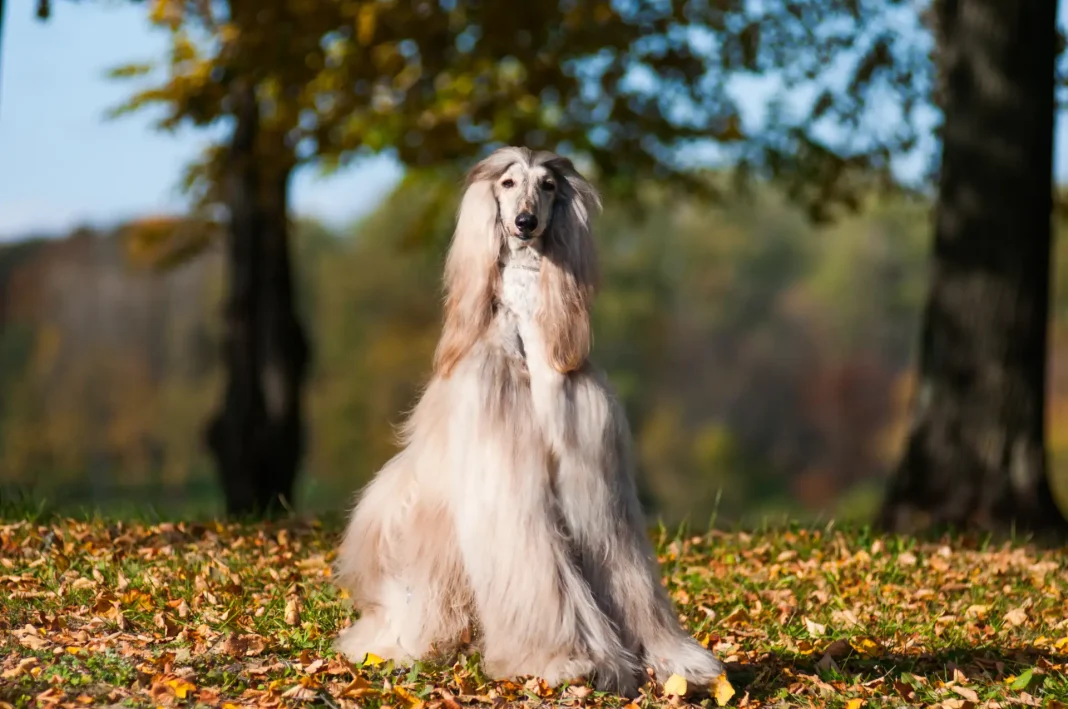
The Afghan Hound is one of the oldest dog breeds in the world. Beneath its elegant exterior lies an athletic and independent dog, prized for its speed, agility and endurance, originally bred for hunting but perfectly at home as a sociable family companion.
Originating in the mountains of Afghanistan, the Afghan Hound spent centuries alongside nomadic tribes, hunting hares, gazelles and even wolves. Speed, agility and stamina made it an exceptional hunter, while its most distinctive feature, that magnificent long, thick coat, protected it from bitter mountain temperatures. Today, however, that same coat has implications for life in warmer climates.
An Afghan Hound can live quite happily in Lanzarote, provided it has access to shade and plenty of fresh water and avoids strenuous exercise during the hottest part of the day. Although it copes well with physical activity, its long, thick coat means particular care must be taken to prevent overheating, especially in summer.
This is a large, statuesque dog, with males generally standing between 68 and 74 centimetres at the shoulder and females measuring around 63 to 69 centimetres. They typically weigh between 20 and 30 kilograms and have a life expectancy of 12 to 15 years.
Temperament-wise, an Afghan has two gears: calm and relaxed indoors, but ready to spring into action the moment it steps outside. As a sighthound, its hunting instinct can kick in very quickly, so letting it loose in uncontrolled open spaces is not advisable. Afghan Hounds tend to be reserved with strangers and form strong bonds with their families without being as emotionally dependent as some other breeds. Provided they are properly socialised from puppyhood, they get on well with children and other dogs.
Its diet should be tailored to the dog’s age and activity level, with good-quality food formulated for medium-to-large breeds. As with any dog, avoiding excess weight is important to protect its joints.
An Afghan Hound’s fabulous long coat is naturally the main focus when it comes to grooming. It needs brushing several times a week to prevent matting and keep it clean, tangle-free and glossy. During the transition from puppy to adult, more frequent brushing may be necessary, while adult dogs may shed slightly more in spring and autumn. Regular baths are also necessary to maintain the coat, while the ears, nails and teeth should all be checked routinely.
Although generally a healthy breed, Afghan Hounds can be prone to hip dysplasia, cataracts, progressive retinal atrophy, hypothyroidism and gastric torsion, or bloat. The latter is a serious condition, but the risk can be reduced by dividing meals into several smaller portions and avoiding strenuous exercise immediately before and after eating.