The Zayed National Museum in Abu Dhabi, the national museum of the United Arab Emirates, was designed by Norman Foster and his studio Foster + Partners, and opened its doors in December 2025.
The museum pays tribute to Sheikh Zayed bin Sultan Al Nahyan, the founding father of the United Arab Emirates, and explores the story of Emirati national identity. It sits in the heart of the Saadiyat Cultural District, Abu Dhabi’s cultural quarter, already home to Jean Nouvel’s Louvre Abu Dhabi, and soon to boast the Guggenheim Abu Dhabi by Frank Gehry.
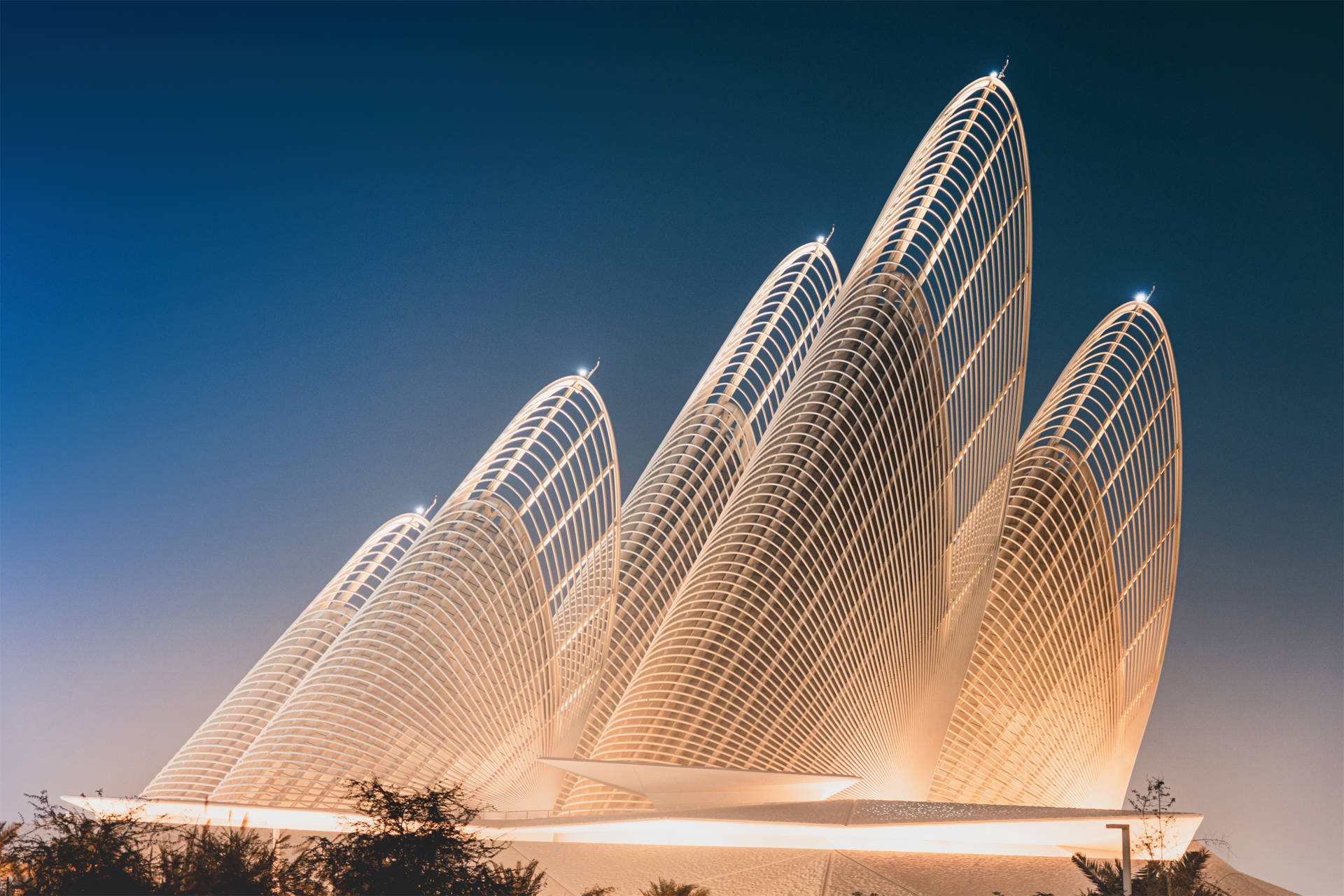
The building’s defining feature is a series of five aerodynamic steel towers inspired by the wings of a falcon in flight. This instantly recognisable silhouette is a direct nod to falconry, a tradition deeply rooted in Emirati culture. With these towers, Foster effectively elevates a local symbol into a feat of contemporary engineering.
Foster resists the temptation of gigantism. The building’s monumentality comes not from sheer mass, but from the balance between an almost topographical base and a vertical profile that is bold without becoming overbearing. The towers concentrate the building’s visual presence, while the rest of the complex dissolves into the horizon. That organic quality humanises its scale and sets it apart from landmarks that rely on spectacle.
The towers are far more than a sculptural gesture. They function as thermal chimneys, drawing out hot air and encouraging passive ventilation. In a city defined by extreme temperatures, they evoke the principles of traditional bioclimatic architecture. The museum’s main body, by contrast, emphasises horizontality and visual restraint. Rather than sitting heavily on the landscape, the structure appears to emerge from it, recalling dunes and wind-shaped desert forms.
The museum spans approximately 57,000 square metres. Its main structure is wrapped in a mineral- toned exterior skin combining stone- like finishes with textured panels designed to reflect solar radiation. Depending on the light, the surface shifts between chalky white and warm sand tones. The entrance is framed by a 600-metre linear garden planted with native vegetation, offering shaded rest areas and references to the traditional falaj irrigation system.
Concrete forms the building’s base structure, while steel defines the towers, complemented by a combination of textured cladding panels and high-performance laminated glass. At current exchange rates, the total cost of the project is estimated at around €620 million.
Inside, the museum houses permanent galleries dedicated to the history of the region, alongside a vast public atrium, research facilities and civic spaces. Fluid, organic volumes throughout the interior lend the complex a more dynamic sense of space.