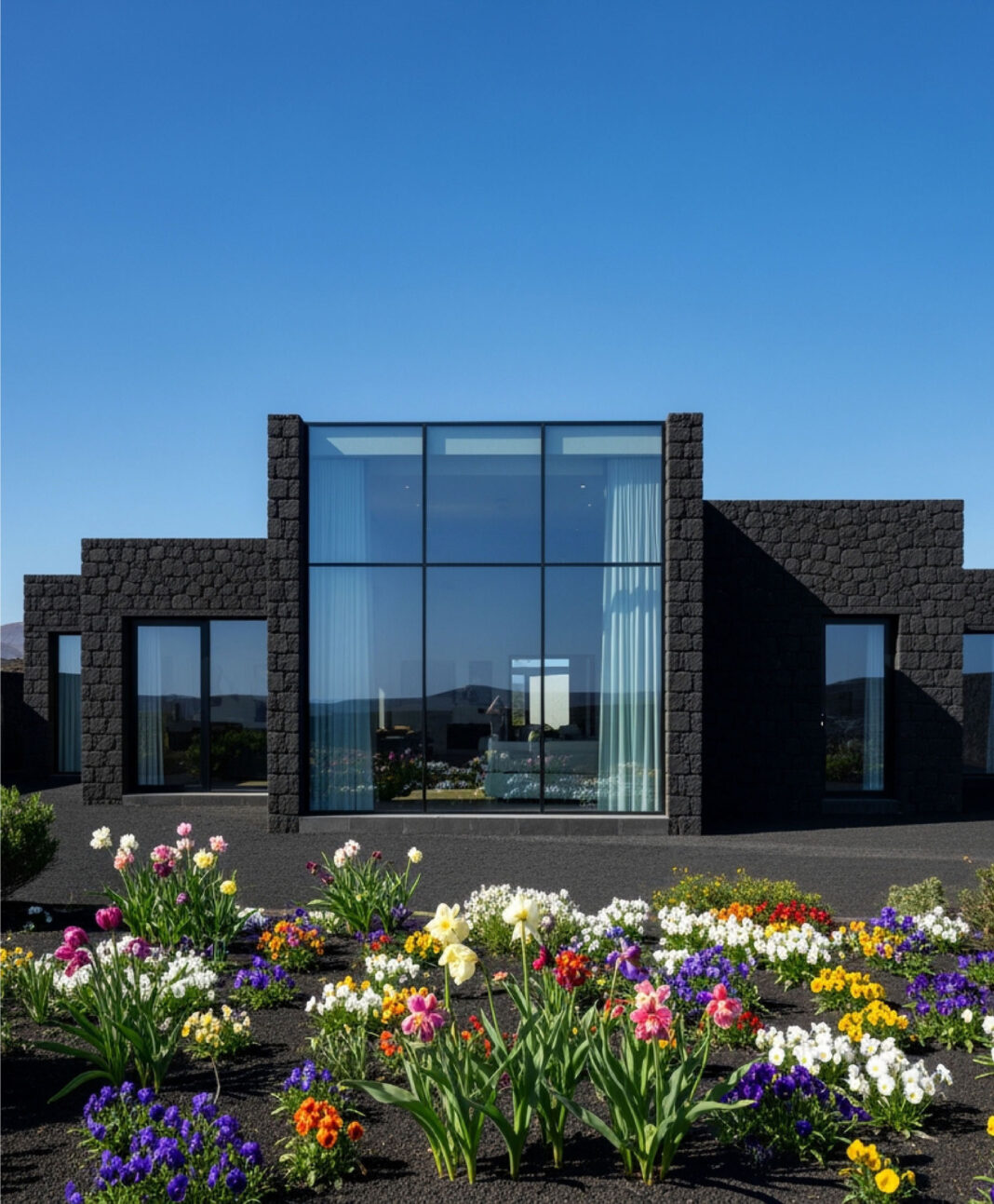
The Canary Islands have long built with volcanic rock. Now the same geology could help shape a new generation of more sustainable cement. Known as volcanic geopolymer cement, it combines volcanic material with alkaline activators and can also incorporate industrial ash. The result is highly mouldable, ideal for 3D printing, with strong resistance to salt-laden environments and fire. It can cut the carbon footprint by up to 80% compared with conventional cement.
Although the science of geopolymers has been understood since the 1970s, only now are they moving from lab trials and prototypes into industry. Unlike conventional cement, they do not set through hydration. Instead, they harden by polymerisation, forming a dense three-dimensional network. The reaction is chemically activated, not heat-driven, so there is no need for kilns firing at 1,450°C. This delivers significant savings in energy, cost, and carbon emissions.
Geopolymers also retain the distinctive volcanic aesthetic of the islands. Their durability and low maintenance make them a promising option for civil works and urban infrastructure, where longevity is key.
Looking ahead five to ten years, if production can be scaled, geopolymers could become more cost-effective than conventional cement. Much will depend on the cost of the activators, how quickly 3D printing is integrated into construction, and whether legislation is introduced to incentivise the use of low-emission building materials.