
From Zumaia to Las Catedrales, via Covachos and Torimbia, this is a journey through extraordinary beaches sculpted by mist, tides and the Atlantic itself. Spain’s northern coastline offers an entirely different way to experience summer.
This route along Spain’s northern coast stretches from the Basque Country to Galicia, linking Itzurun (Zumaia), Covachos, Torimbia and Praia de Augas Santas — also known as Las Catedrales — through four very different ways of experiencing the Atlantic, between cliffs, tides and fishing villages. The landscape shifts, temperatures soften, and the experience is as soothing as it is energising. Whether you want to follow the whole route or make your own diversions along the way, the journey along these northern beaches begins long before you reach the sand.
Zumaia lies in Gipuzkoa, around thirty minutes from San Sebastián. The beach at Itzurun, just a ten-minute walk from the town centre, feels almost otherworldly. Its vast flysch cliffs — rock strata shaped over millions of years by the Cantabrian Sea — transform the landscape into something almost unreal. At low tide, immense rock platforms and exposed layers emerge, stretching towards the horizon. This extraordinary geological formation forms part of the Basque Coast UNESCO Global Geopark.
Even at the height of July and August, the beach is experienced differently here. Less about heat and sunbathing, more about walking, contemplating and allowing the Atlantic to work its spell. And where the sand ends, a town begins, every bit as picturesque as it is authentic, with outstanding Basque gastronomy at its heart. The Hermitage of San Telmo appeared in the film Spanish Affair (Ocho apellidos vascos), while Itzurun became one of the iconic locations from the seventh season of Game of Thrones.
Further west along the Cantabrian coast, around twenty minutes from Santander, Playa de Covachos offers something smaller and far more intimate. It stands out for its pale sand, the remarkable clarity of its waters and the small rocky islet just offshore, linked to the beach by a sandbank at low tide. Sheltered by green hillsides and cliffs and shaped constantly by the tides, this is where the Atlantic feels closer and hushed. Although access involves descending a steep slope, the reward is a slower, more contemplative experience, far removed from the large tourist beaches. Afterwards, Santander and the surrounding coastline offer excellent restaurants and some of the most elegant scenery in northern Spain.
Torimbia Beach lies within the municipality of Llanes on Asturias’s eastern coast. A sweeping crescent of sand, sheltered by soft green hills and meadows yet open to the sea, it transmits a sense of freedom and seclusion that are hard to come by on busier beaches. Reaching it involves a short walk, but the the effort is richly rewarded with golden sand, open water and one of the most recognisable panoramas on the Cantabrian coast. Here again, the Atlantic feels unhurried and enveloping. Torimbia is a beach made less for the rhythm of a conventional summer holiday than for disconnecting, walking, and simply taking in the landscape.
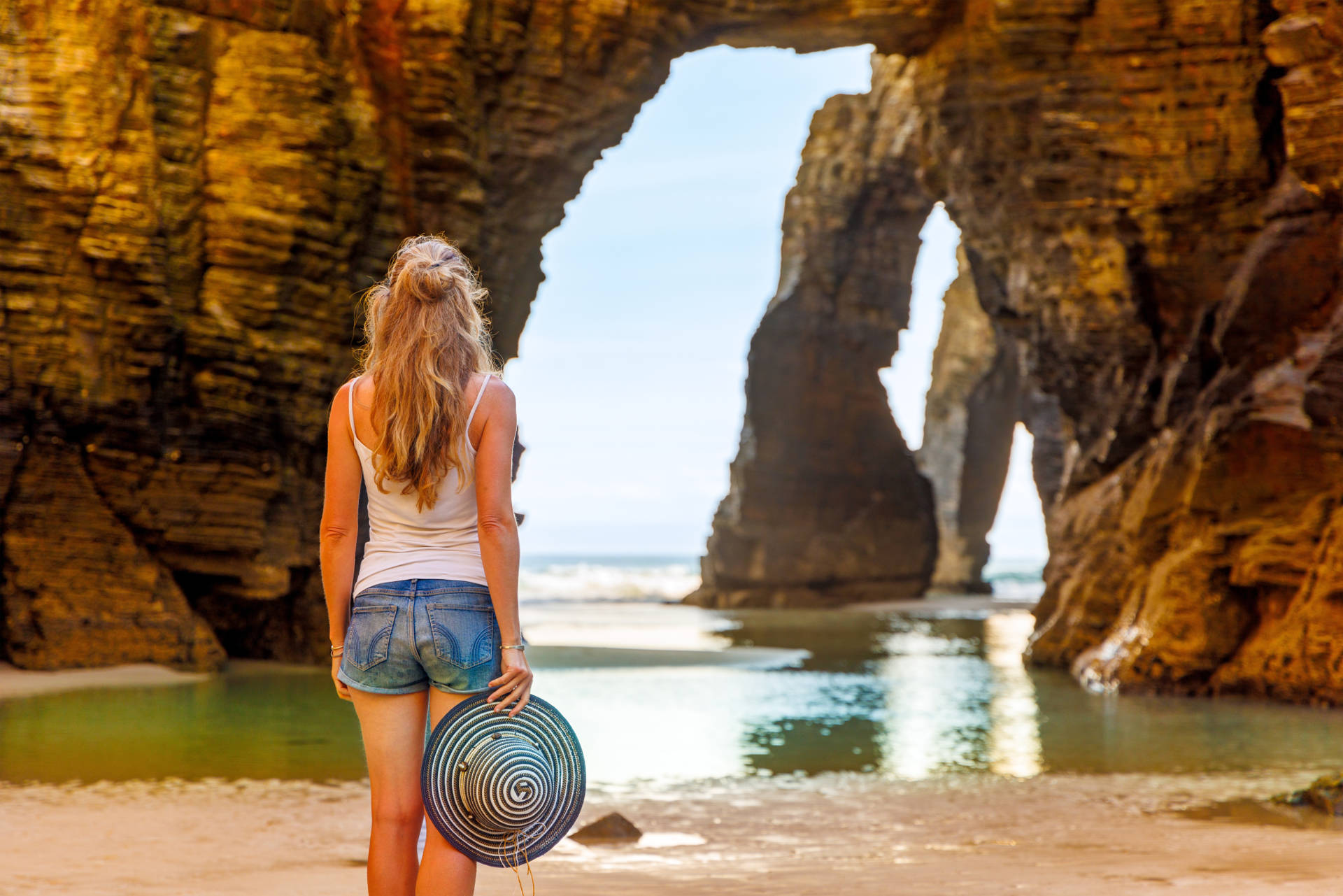
The route culminates at Praia de Augas Santas, better known as Las Catedrales, on Galicia’s great Atlantic edge. Here the shoreline caresses immense arches and towering rock formations sculpted over centuries by wind and waves, the whole place feeling like a cathedral open to the sky. Visits require a reservation, free of charge, and ideally booked online in advance. The experience is best timed to coincide with low tide, when the remarkable scale of the landscape can be fully appreciated. Nearby lies Ribadeo, where beaches such as Praia das Illas and Os Castros offer a more traditional day by the sea, with swimming, parasols and open Atlantic horizons, rounding off the experience with dramatic coastline, gastronomy and the unmistakable presence of the ocean.