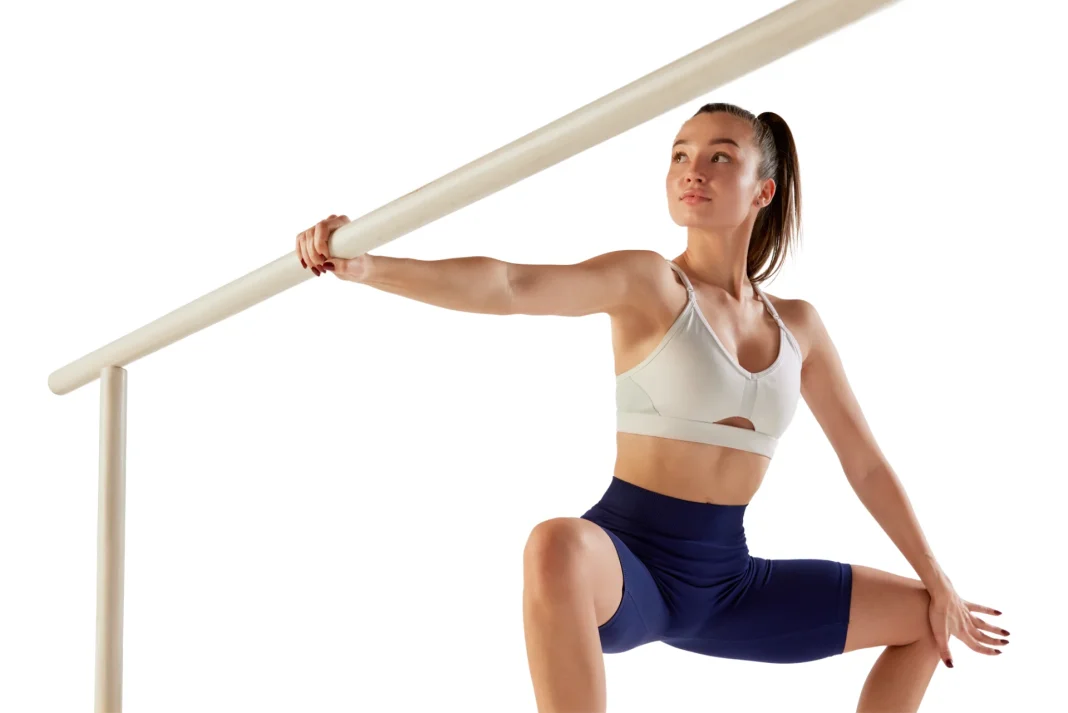
Barre has rapidly become one of the most popular forms of exercise in gyms and specialist studios. Inspired by the training methods of classical dancers, it combines elements of ballet, Pilates and yoga with strength training. Classes are low impact and can be adapted for people of different ages and levels of fitness.
The ballet barre provides support, but no previous dance experience is required. Exercises are based on short, precise and repetitive movements, with positions often held for several seconds. The emphasis is on form, alignment and core engagement, helping to develop strength, balance, flexibility and postural control without the need for strenuous exertion.
Low impact does not necessarily mean easy. The small, controlled movements can be deceptively demanding, while light hand weights, resistance bands and exercise balls increase the challenge without placing excessive strain on the joints. Although particular attention is paid to the abdominal muscles, glutes, legs and back, the controlled sequences also engage stabilising muscles throughout the body, making barre a well-rounded, full-body workout.
This combination of physical challenge, low impact and adaptability helps explain barre’s growing following. As well as developing muscular endurance and encouraging better posture, it offers a satisfying alternative for people who want to work hard without the jumping, running or repeated impact on the joints associated with many high-intensity classes.