
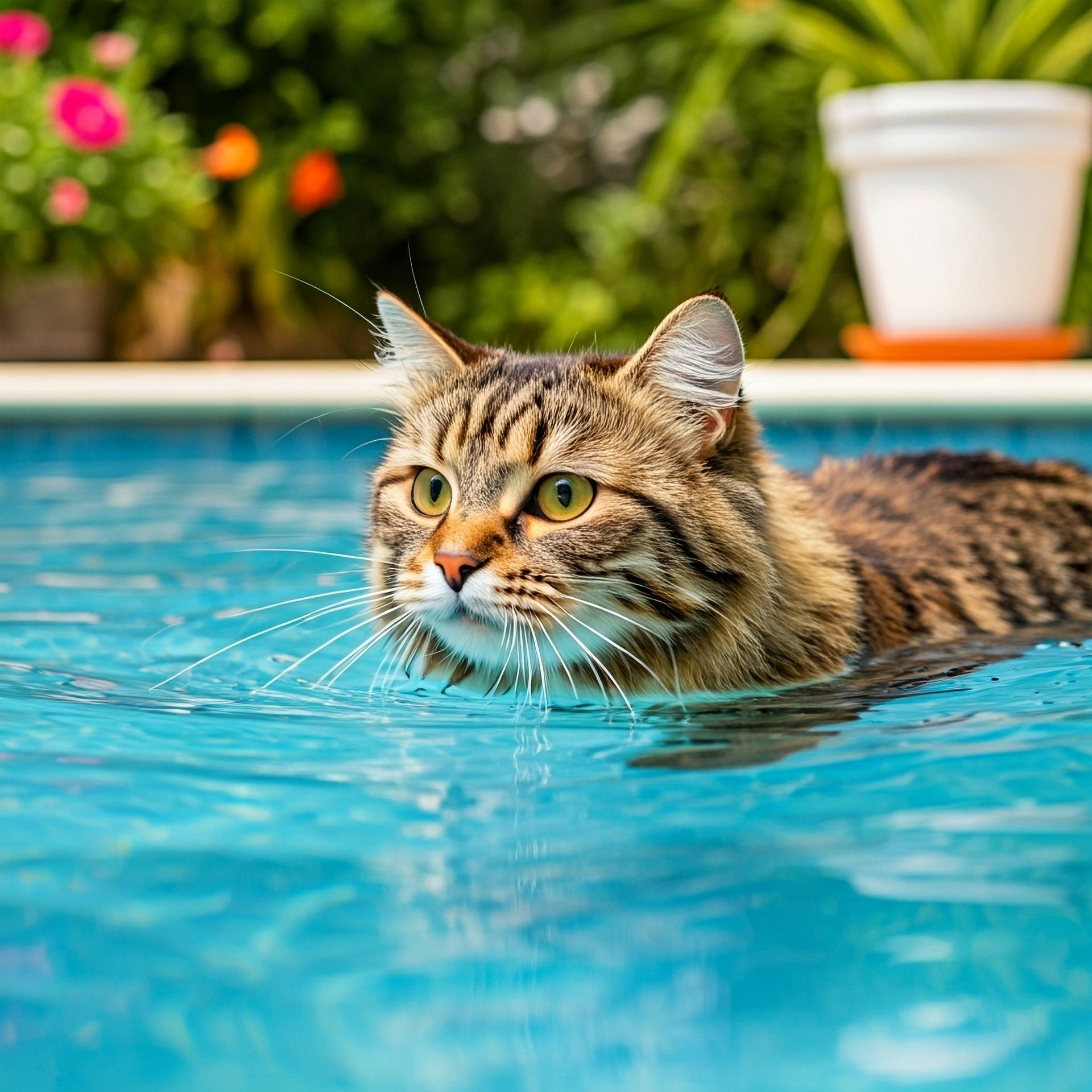
Not every cat is instinctively wary of water. Breeds such as the Turkish Van and the Bengal are famously fond of a dip and can even be surprisingly capable swimmers.
Far from having the typical feline aversion to water, the Turkish Van and the Bengal share an unusually close relationship with it. Originating from Turkey, the Turkish Van has a partially water-resistant coat and a natural inclination to swim. In contrast, the Bengal, bred from crossing the Asian leopard cat with various domestic breeds, combines curiosity and agility with a distinct fondness for water- based play. You’re unlikely to see either take a dip in the ocean, but both tolerate and genuinely enjoy contact with water in controlled settings.
Both breeds are well-suited to Lanzarote’s warm, arid climate. The Turkish Van benefits from its lightweight coat and natural resilience, while the Bengal’s short fur and adaptability make it equally well-suited to island life. As with any cat, shade, fresh water, and a stimulating environment that respects their natural behaviour are essential.
Physically, the Turkish Van is the larger of the two, typically weighing between 4.5 and 7 kilos, while the Bengal is leaner and more athletic in build, averaging around 5 kilos. Both are considered long-lived breeds, and, with proper care, have a life expectancy of 12 to 16 years.
The Turkish Van and the Bengal are highly active cats that require constant stimulation. Without enough to occupy them, they may become hyperactive or develop destructive habits such as chewing objects or causing damage around the home. One way to avoid this is by establishing a daily play routine from kittenhood. As fast learners, they respond well to clear boundaries and quickly catch on to what is and is not allowed. Creating a stimulating environment also makes a real difference, especially for Bengals, which thrive with climbing spots, toys and interactive spaces.
Beyond their physical prowess, both breeds are exceptionally intelligent and social. They generally get along well with children and can live happily alongside other cats or even dogs, provided introductions are handled properly. They enjoy human company and can be incredibly affectionate, though they are not necessarily lap cats and do not always appreciate being held for long periods.
Neither breed requires a special diet, although the more energetic Bengal benefits from high-quality, protein-rich food. Grooming is equally manageable: the Turkish Van may need brushing once a week or every fortnight, while the Bengal requires little more than basic coat care. Both breeds are robust and generally healthy, although owners should be aware of hereditary conditions such as hypertrophic cardiomyopathy, a rare form of heart disease.