A garden is always an exercise in adapting to the environment. The modern Mediterranean-style gravel garden, designed to cope with drought and keep the landscape beautifully pared back, is ideal when given a Lanzarote twist.
A gravel garden is, in essence, a dry garden built on a mineral layer, with gravel forming most of the visible surface. Vegetation is sparse and intentional, favouring drought-tolerant, xerophytic species that need minimal watering. With clean lines and uncluttered space, the effect is calm, modern, and resilient. It’s a leading European trend in 2026 for a simple reason: as southern Europe grows drier, gravel gardens can use up to 80% less water than a traditional garden.
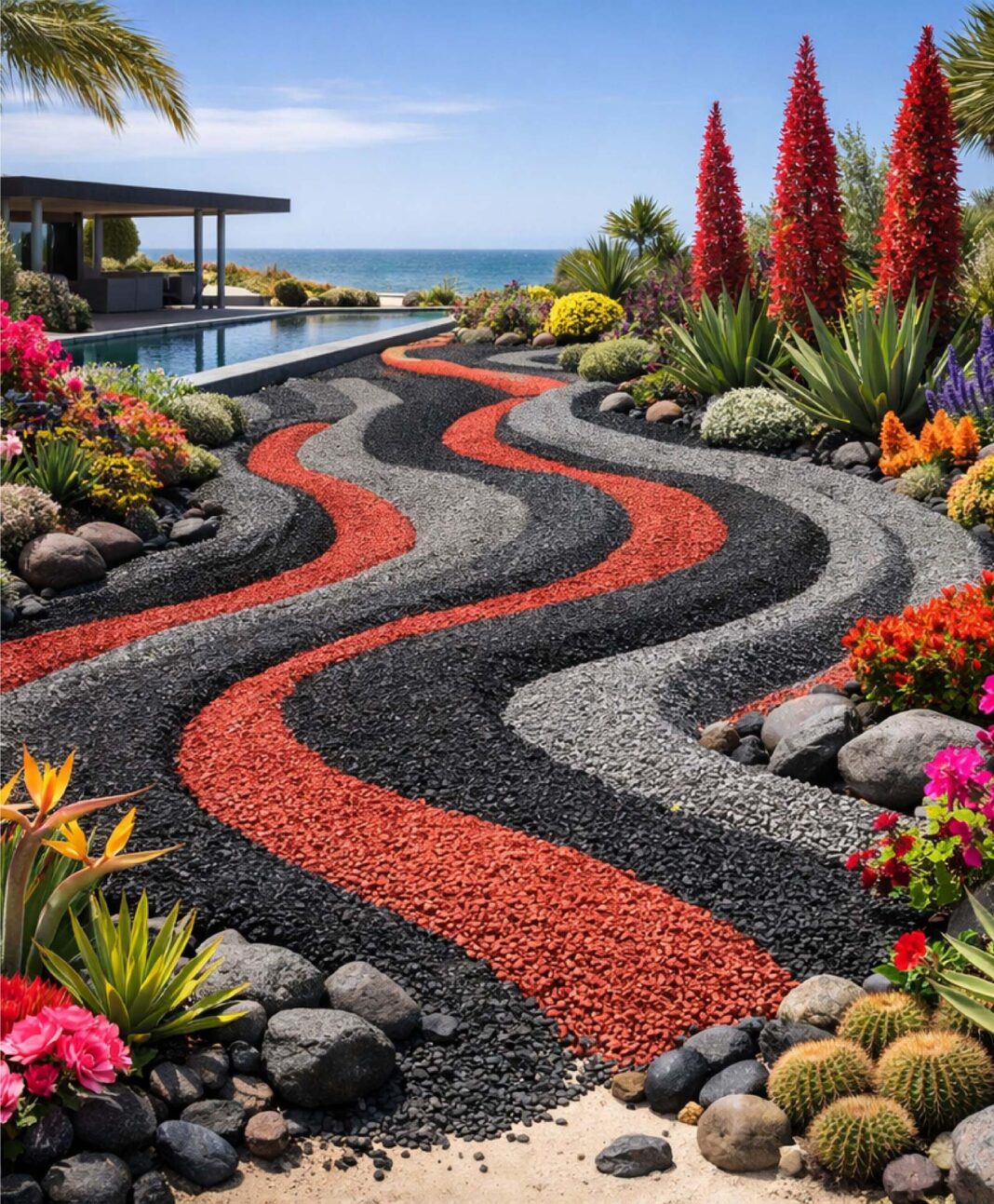
To make the look truly Lanzarote-friendly, start with the material. Swap standard gravel and stone for volcanic pebbles (rofe)and lava. That single choice turns a Mediterranean dry garden into a contemporary mineral landscape that echoes the island’s volcanic identity. Also known as picón or lapilli, rofe is natural, sustainable and readily available. Local vineyards have long proved its value in trapping precious moisture and protecting the soil. Yet it’s not just a practical mulch: its dark, mineral surface, in tones from deep black to warm, rusty reds, throws greenery into sharp relief and creates rich, sculptural shadows.
When it comes to planting, the island itself is the best guide. Choose species that thrive in the local climate: red or yellow aloe varieties in softer or giant forms; verodes and aeoniums; agaves; cardones; strelitzias; pitas; smaller dragon trees complemented by hardy ornamental grasses.
Complete the composition with volcanic rock as an alternative to the limestone or travertine often used as static sculpture in European gravel gardens. On Lanzarote, dark, porous stones with real presence set the rhythm and carve out shade. Intersperse with smaller, rounded stones in grey or ochre tones, then finish with touches of pale wood or matte-black ironwork.
Finally, embracing negative space is an essential design choice with Lanzarote-style gravel gardens. The emptiness is an intentional part of the landscape, not an absence; it gives the eye room to see. Think broad sweeps of rofe, organic lines and areas of sparse flowering with the mineral surface taking centre stage. A few elements, thoroughly spaced, create a visual rhythm akin to music: slow, deliberate, with silences that give plants and stone their full voice.