
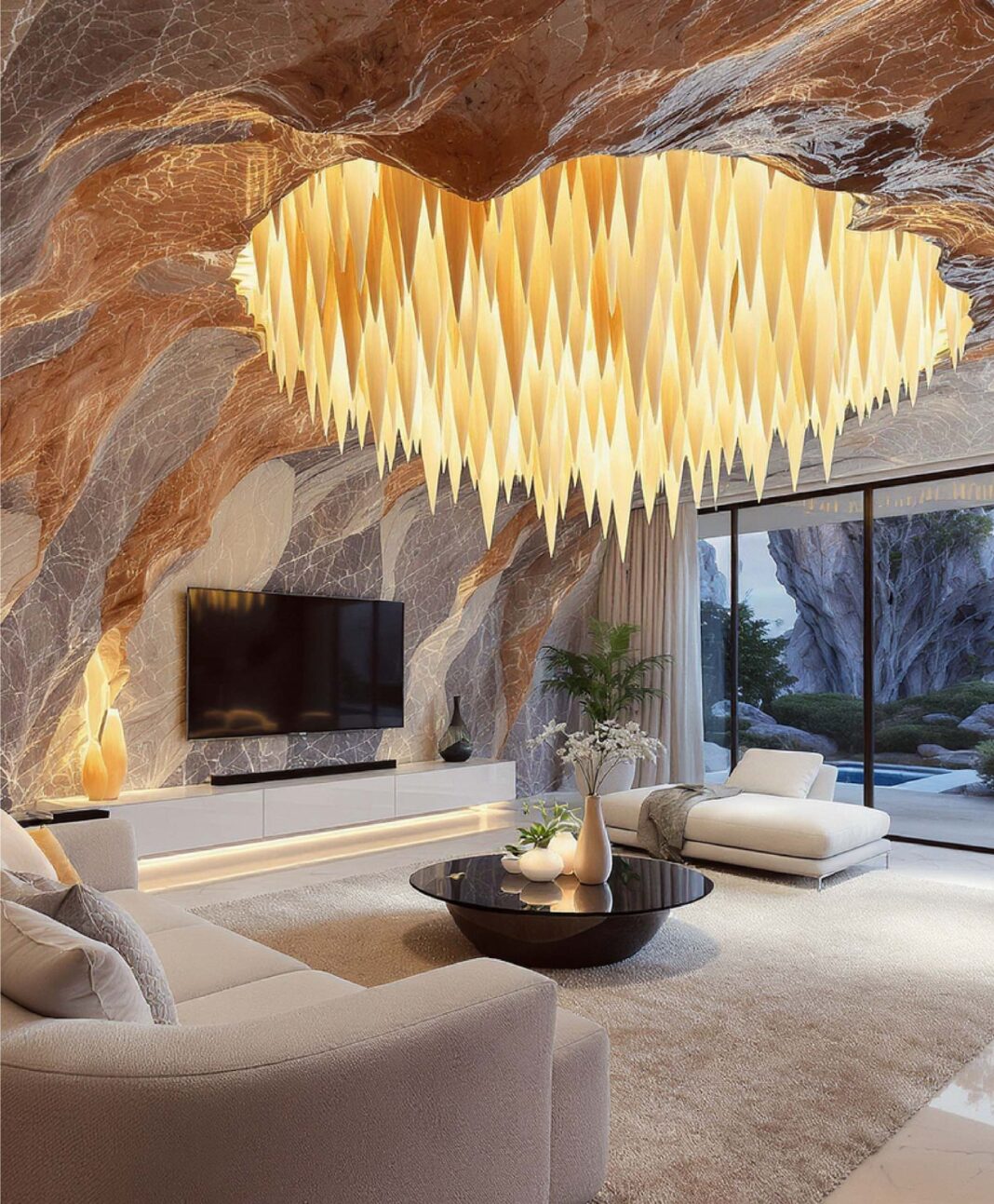
Ceilings are no longer the forgotten plane above our heads, but an active element in a more architectural approach to interiors. Treating the ceiling as a fifth wall is one of the simplest ways to make a room feel finished.
The momentum has been building for a while, but in 2026, ceilings are finally stepping out of the background and into the design conversation. Some are calling it the fifth wall: a surface that shapes a home’s look, mood and identity. It’s no quirky flourish or isolated statement. It’s the logical result of thinking about a room as a unified whole, where every surface matters, including the one overhead.
At the heart of the trend is spatial coherence, and colour is often the simplest way to bring the fifth wall into play. Ceilings move beyond default white into off-whites, sands and warm greys that instantly soften a space. In generous rooms with high ceilings, deeper tones such as olive green, smoky blue or pale terracotta do the unexpected: they visually lower the ceiling, easing any sense of emptiness and making the room feel warmer and more intimate, without shrinking it.
Texture has a role to play, too. The trend embraces details like mouldings and timber, whether through panelling or minimalist false beams. Flat mouldings, for instance, shape the ceiling by creating shadow and a hint of volume. Placed at the junction of wall and ceiling, or running around the perimeter, they introduce subtle changes in level that add depth even without direct lighting. Made from technical plaster, high-density polyurethane or lacquered MDF, they offer crisp, continuous profiles with restrained reliefs of just one to three centimetres. For a softer finish, ultra-thin timber panelling adds warmth without visual clutter.
Lighting, too, is reimagined. Recessed coves, concealed LED strips and wall-washers turn the ceiling into both technical support and an aesthetic tool. Physically, these details create slim recesses to house the fittings. Visually, they hide the light source, allowing it to sculpt rather than simply illuminate the space. Light no longer hangs from above. It flows.
In practice, incorporating the ceiling into your design concept is easily applied to different styles and room sizes. The key lies in getting the proportions right and reading the space as a whole. In larger rooms, deeper tones or more considered finishes add character and depth. In smaller spaces, a soft wash of colour or indirect light can define the room’s identity without overwhelming it.