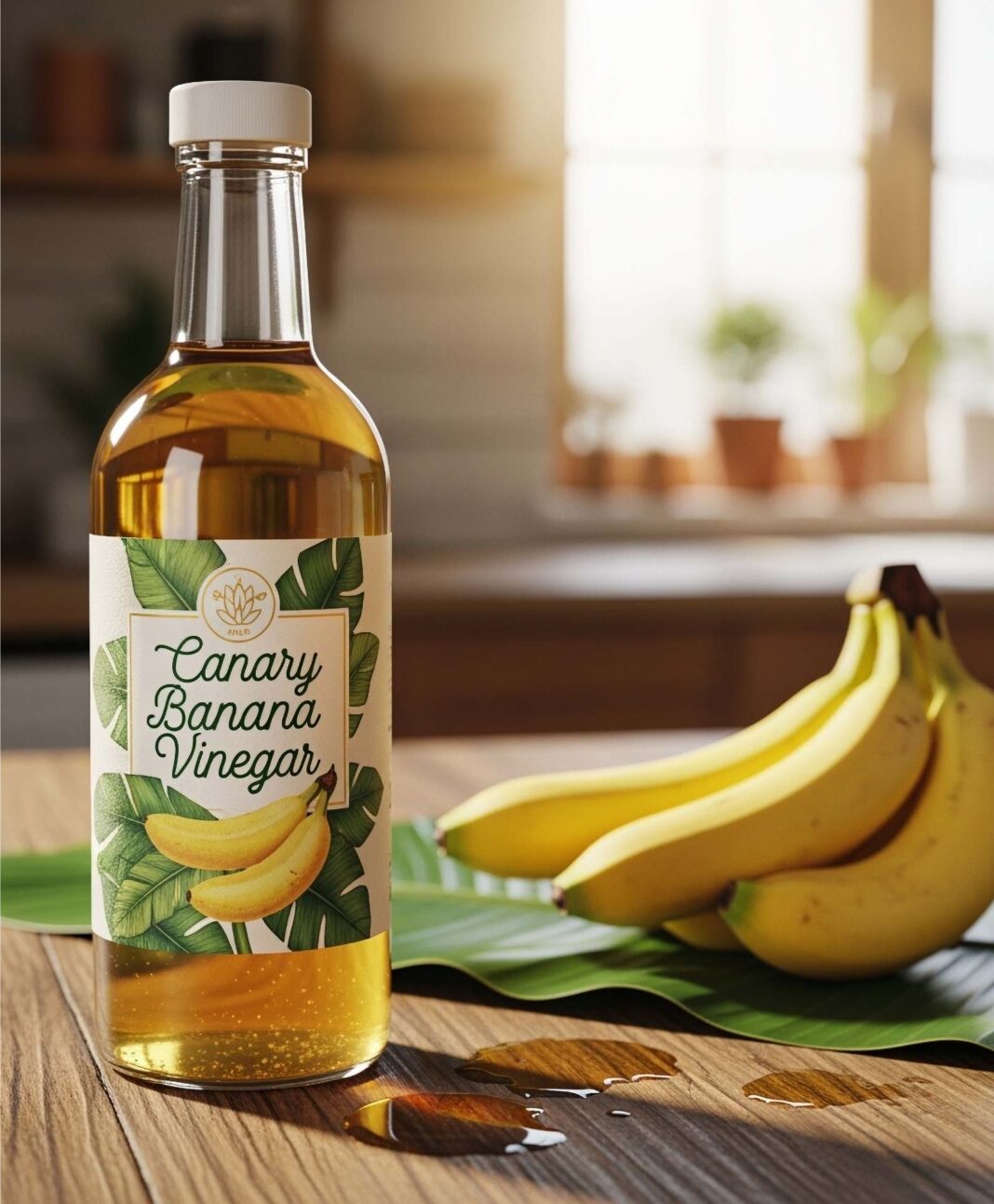
Every bit as unexpected as it is delicious, Canary Island banana vinegar is an innovative addition to the gourmet market, where it has carved out a niche thanks to its unique qualities. Its delicate, refined flavours have opened doors in professional kitchens, where it’s used for dressing salads and cheeses, and for marinating meats, seafood, and poultry, lending them a very special twist.
The brand behind this creation is Bodegas Platé in El Sauzal, Tenerife, which has been producing banana vinegar since 2010. Only Canarian bananas are used, whose quality and characteristics are protected by their own PGI (Protected Geographical Indication). With this certified raw material, they produce both their vinegar and a vinegar cream, similar in texture and use to Balsamic vinegar from Modena.
Vinegar can be made from any fruit with a medium-to-high sugar content, and Canarian bananas fit the bill perfectly. For production, the fruit is pressed at optimum ripeness to extract the juice. This then undergoes a double fermentation process. The first is alcoholic, as in winemaking, converting sugars into alcohol. The second is acetic, in which bacteria transform the alcohol into vinegar.
Platé’s standard Canarian banana vinegar offers fruity notes, a gentle sweetness, and a moderate acidity of 5%. Like wine, it contains sulphites. The vinegar cream, which has a denser texture, contains 20% banana pulp. Its smooth, balanced, syrupy consistency gives it great versatility, making it ideal for condiments, salad dressings, marinades, and even a finishing touch for inventive cocktails. Since it is made only from pure Canarian banana juice, it contains no gluten and no animal-derived ingredients, making it suitable for vegans.
This is not an aged vinegar, like Sherry vinegar or certain wine vinegars, nor like balsamic vinegar of Modena, so it does not undergo barrel maturation. However, like all commercial vinegars, banana vinegar is filtered and stabilised before bottling to guarantee food safety and consistent acidity. Throughout both fermentation stages and subsequent stabilisation and storage, it is kept in stainless-steel tanks to preserve the fresh, tropical banana notes and prevent any further fermentation once it’s in the bottle.